

















Teardrop Flags for Storefronts: Check Sign Rules First
A cheap, reusable way to get noticed, if it meets your city's temporary sign code.
 By Promogator Staff
•
•
3 min read

Teardrop flags for storefronts are one of the cheapest ways to get noticed from the street during the holiday shopping rush. They move in the wind, carry a full-color design and can be set up and taken down in minutes. Before you order, though, check one thing many buyers skip: your city's temporary sign rules.
Why teardrop flags for storefronts work
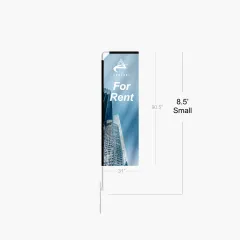
A storefront flag solves a specific problem: people walking or driving past need a reason to look. A curved teardrop shape stays readable as it moves, and a full-color print means you can use your logo, a short message or a seasonal graphic. Promogator's teardrop flag listing describes an iconic curved shape that works indoors and out, with a pole set, indoor and outdoor base options and an optional carry bag.

For counters, reception desks and pop-up tables, a desktop version carries the same look at a smaller scale.

Check your city's sign rules first
Many cities treat feather and teardrop flags as temporary signs. The rules vary widely, so read your own city's code or call the planning office. Two published examples show the range:
- The City of Maricopa, Arizona's temporary signs guide says all temporary signage, including flying banners and feather flags, requires a Temporary Sign Permit before it goes on display, unless the zoning code states otherwise.
- The City of Longmont, Colorado's temporary sign handout limits feather flags to 12 feet in height, requires a setback from the property line equal to the flag's height, and allows a maximum of three per property and one per 75 feet of street frontage. It also limits temporary signs to 30 days of display in any quarter and requires them to sit on the business's private property.
These are examples, not rules for your town. They show why a quick check matters: a tall flag that is legal in one city may need a permit, a shorter pole or a different spot in another.
Questions to ask before you order
- Is a permit required? If so, how long does approval take?
- Is there a height limit? Compare it with the flag size you are considering.
- Where can it stand? Most codes keep temporary signs on private property and out of sidewalks and sight lines.
- How long can it stay up? Some cities cap display days per quarter or per year.
- What base do you need? A spike suits grass; a weighted or cross base suits pavement and indoor use.
Design tips for a flag that reads from the street
- Use five words or fewer. "Open," "Holiday Sale" or your name reads better than a sentence.
- Go big on contrast. Dark text on a light field, or the reverse, carries farther than mid-tones.
- Put the logo near the top, where the flag is widest and least likely to curl.
- Send vector art. Our artwork requirements explain file types and colors.
Timing and care
Print catalog items can move faster than decorated apparel, but each product page shows its own production time, and the clock starts after proof approval and payment. Bring flags inside in high winds and at night to extend their life, and store them dry. If you are planning for Small Business Saturday or a holiday sale, order early enough to get a permit in place too.
The takeaway
Teardrop flags for storefronts are simple, reusable and visible, as long as they meet local rules. Check your city's temporary sign code, choose a size and base that fit, and keep the design bold and short. Browse flags to compare options.
Sources
Written with AI assistance and reviewed by Promogator Staff. Our editorial standards
Promogator Staff
Written and reviewed by the Promogator team. Our editorial standards
Products mentioned in this article
Live pricing — updated Nov 18, 2026.


Need a quote?
Tell us what you have in mind and we will come back with pricing, lead times and options — no obligation.



