





















Can you sublimate on nylon?
 By Promogator Staff
Reviewed Nov 6, 2026 2 min read
Not well. Sublimation uses dye that bonds with polyester or polymer coatings at high heat. Nylon takes that dye poorly, so colors usually look dull, fade or wash out, and the heat can scorch the fabric. For nylon bags and jackets, choose screen print, heat transfer, DTF or embroidery instead, or pick a polyester version.
- Sublimation is designed for polyester and polymer-coated surfaces, not nylon.
- Nylon usually gives dull, fading color and can scorch under press heat.
- Many bags sold as nylon are really polyester, so check the label.
- Screen print, heat transfer, DTF and embroidery suit nylon better.
- Sublimation only works on white or very light base colors.
Why nylon is a poor fit for sublimation
Sublimation turns solid dye into gas under heat and pressure. The dye then locks into the fibers of the material. This works best on polyester, because polyester fibers open up at press temperatures and trap the dye. Hard items with a polymer coating, like some mugs, work the same way.
Nylon behaves differently. It can pick up some of this dye, but the bond is weak. In practice you often see:
- Dull color. The print looks washed out next to the same art on polyester.
- Fading. Color can fade with washing, rubbing and sun exposure.
- Heat damage. Nylon can scorch, yellow or glaze at press temperatures, and thin nylon can pucker.
Because results vary by fabric blend, coating and press settings, most decorators avoid sublimating nylon for customer work.
Check what your bag or jacket is really made of
Many items that people call nylon are actually polyester. Common examples are backpacks, duffels and light jackets with a ripstop or taffeta look. The fabric label or the product description tells you the fiber content. A 100% polyester shell can be sublimated. A nylon shell is better decorated another way.
Two more rules apply to any sublimation job:
- The base color should be white or very light. Sublimation dye is transparent, so it will not cover a dark fabric.
- Sublimation usually colors the whole fabric before it is sewn, which is how all-over prints are made. It is less common on finished nylon goods.
Better ways to decorate nylon
- Screen printing works well on flat nylon panels with simple logos and a few spot colors.
- Heat transfer and DTF suit full-color artwork and small runs. The transfer sits on top of the fabric, so it does not rely on the fabric fibers.
- Embroidery holds up on jackets, vests and bag panels that are sturdy enough to support stitching.
- Laser engraving is for hard items and some leather patches, not for soft nylon.
The right choice depends on the fabric weight, any water-resistant coating, the logo's detail and where the logo sits. Coated nylon can resist ink and heat, so the product page and a rep can confirm what works on a specific item.
Mistakes to avoid
- Assuming a bag is nylon or polyester without reading the label.
- Sending a full-color photo for a method that only handles a few spot colors.
- Expecting sublimation to show on a dark or colored fabric.
- Skipping the proof. Check it for color and placement before approving.
Products that work for this
Real examples from our catalog, with live pricing. Tap one to see it with your logo.

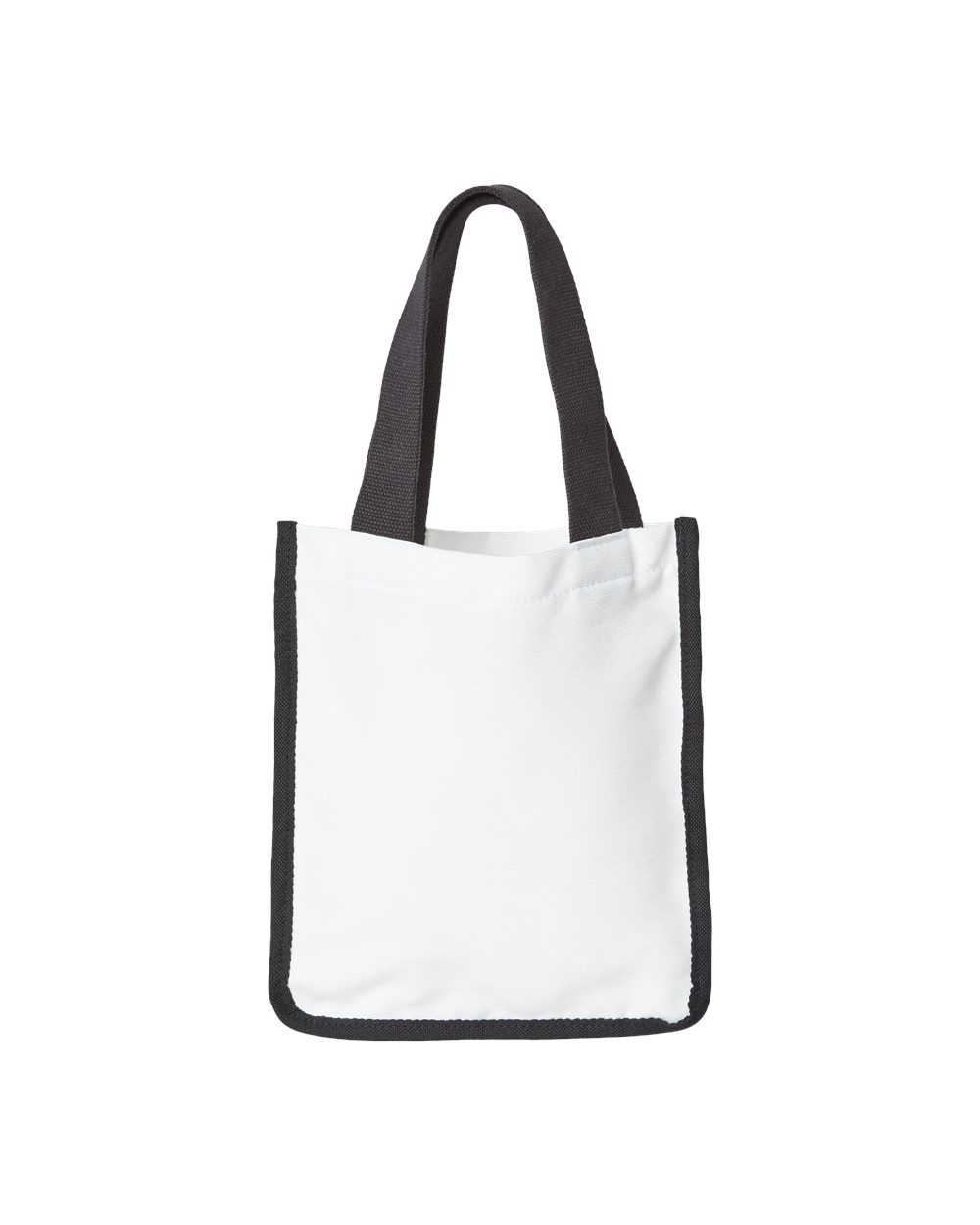

Shop Bags and Accessories
See all →


People also ask
Does sublimation work on nylon bags or jackets?
Usually not well. Nylon bags and jackets tend to give faded color and risk heat damage. If the item is actually polyester and light in color, sublimation can work. Otherwise screen print, heat transfer, DTF or embroidery is the safer choice.
Can nylon be sublimated like polyester?
No. Polyester fibers trap sublimation dye and hold it through washing. Nylon bonds with the dye much more weakly, so the print looks duller and wears off faster. Nylon also tolerates press heat less well than polyester.
What fabrics work best for sublimation?
Polyester, in white or light colors, gives the brightest and most durable result. Polyester blends work too, but the print fades toward the look of the non-polyester fibers. Polymer-coated hard goods like some mugs also work.
How can I tell if my bag is nylon or polyester?
Read the fabric label or the product description, which lists the fiber content. The two look and feel alike, so you cannot reliably tell by touch.
Ask PromoAI these questions
Tap one and PromoAI searches our live catalog and answers in seconds.

