




















How do I choose shirt sizes for a group when I don't know everyone's size?
 By Promogator Staff
Reviewed Nov 4, 2026 3 min read
Collect sizes with a quick survey if you can. If you can't, order a bell-curve mix: mostly M, L and XL, fewer S and 2XL, and a small share of 3XL and up. Choose a unisex style, add a few extra mediums and larges as buffer, and check the maker's size chart before you order.
- Ask people for sizes first; even a simple form beats guessing.
- With no data, put most shirts in M, L and XL.
- Unisex cuts fit a wider range of people than fitted cuts.
- Add a small buffer in the most common sizes.
- Check the size chart for the exact shirt before ordering.
A survey is the most accurate way to size a group. When you can't run one, a size curve is the next best thing. The right mix depends on who is in the group, so start with the people, not a formula.
Why a survey beats a formula
Every group is different. A staff of office workers, a youth team and a volunteer crew will all have different size needs. Even a two-minute poll (a shared spreadsheet, a form or a sign-up sheet) removes most of the guessing. Ask for size and, if you offer more than one style, fit preference. Set a deadline so late answers don't hold up your order.
Tell people the shirt style when you ask. A fitted women's cut and a boxy unisex tee run differently, so one person may pick different sizes for each.
A starting size curve when you have no data
Most adult groups follow a bell curve. The middle sizes sell most, and the ends sell least. As a rough guide, these are typical shares for a mixed adult group:
- S: about 10%
- M: about 25%
- L: about 30%
- XL: about 20%
- 2XL: about 10%
- 3XL and up: about 5%
Treat these as a starting point, not a rule. Shift the mix based on what you know:
- Mostly women: move more shirts into S and M, and consider a women's cut.
- Mostly men: move more shirts into L, XL and 2XL.
- Mixed team with a wide age range: keep the curve and add a few extras at both ends.
- Youth groups: use youth sizes, which run by age or chest size, and ask parents.
For a group of 50, that curve works out to about 5 small, 12 or 13 medium, 15 large, 10 extra large, 5 2XL and 2 or 3 in 3XL or larger. Round the numbers so they add up to your total.
Mistakes to avoid
- Ordering equal numbers of every size. You will end up with too many of the ends and too few of the middle.
- Skipping the size chart. Brands measure differently. Check the chart for the exact shirt you are ordering.
- Ordering exactly the headcount. People join late or change their minds. A small buffer in M, L and XL covers most surprises.
- Forgetting that fabric shrinks. Cotton may shrink a little in the wash. If someone is between sizes, size up.
- Ignoring fit. A fitted cut runs smaller than a classic cut. A unisex style is the safest choice when you don't know the group.
Plan for the leftovers
Extras are not wasted. Keep spares for new hires, late sign-ups and replacements. If you are ordering for an event, ask guests to pick a size when they register. If that isn't possible, hand out shirts by size at check-in and keep the most common sizes in reserve.
If your group is large or the budget is tight, order a bit more than your headcount in M, L and XL and a bit less at the ends. Reorders are possible, but a second order takes extra time, so it is better to get the first mix close.
Step by step
-
Pick the shirt style first
Choose a unisex or classic cut if the group is mixed. Sizing differs by style, so decide this before you collect sizes.
-
Ask for sizes
Send a short form or sign-up sheet with the shirt style and a clear deadline. Link to the size chart so people can check.
-
Fill gaps with a size curve
For anyone who doesn't answer, use a bell curve with most shirts in M, L and XL.
-
Check the size chart
Compare chest and length measurements on the maker's chart with a shirt people already own.
-
Add a small buffer
Add a few extra shirts in the common sizes for late joiners and mistakes.
-
Total it up
Make sure the sizes add up to your final quantity before you place the order.
Products that work for this
Real examples from our catalog, with live pricing. Tap one to see it with your logo.


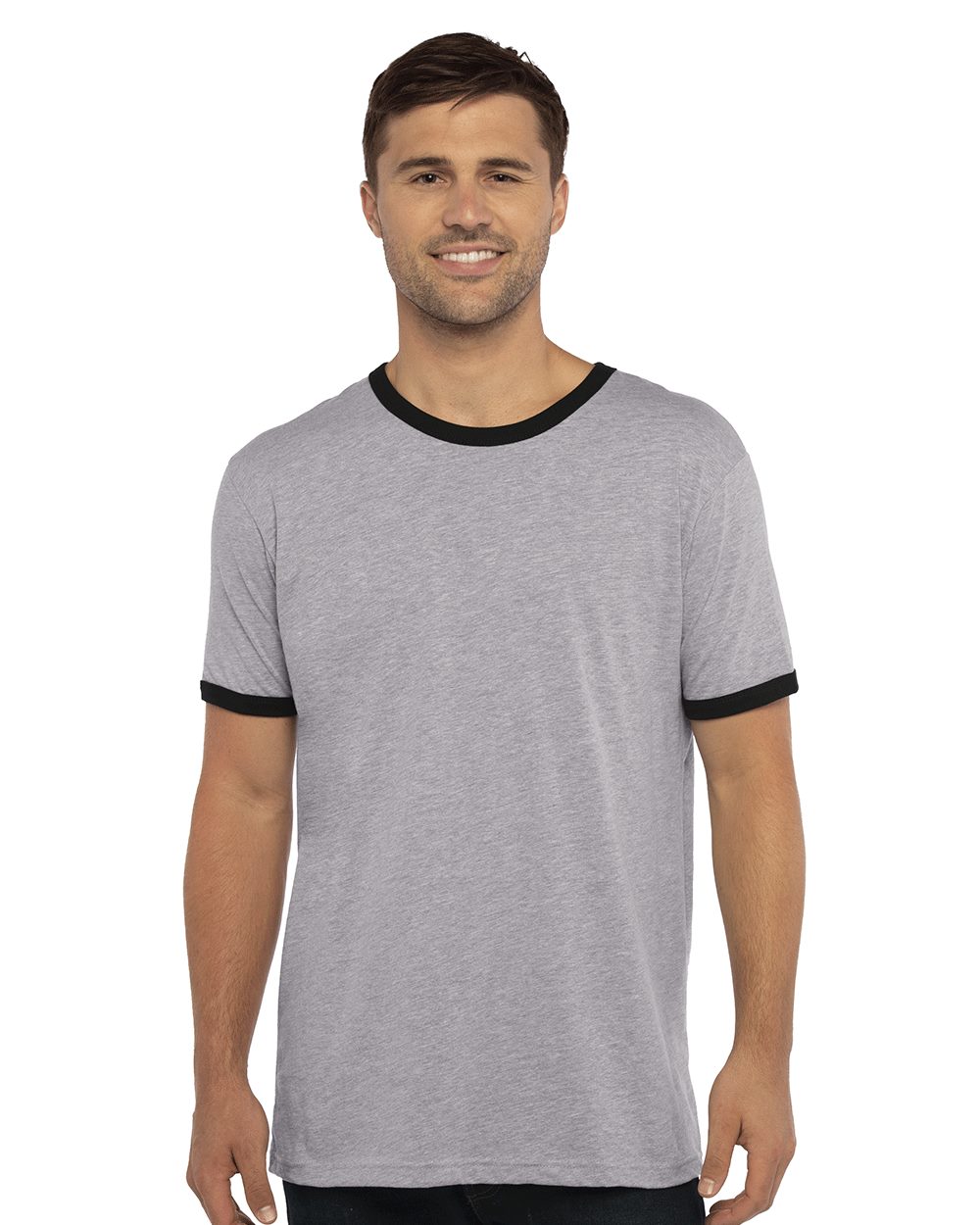
Shop T-Shirts
See all →


People also ask
How many of each size should I order?
With no data, order mostly M, L and XL, fewer S and 2XL, and a few 3XL or larger. A common split is about 10% S, 25% M, 30% L, 20% XL, 10% 2XL and 5% larger. Adjust for your group.
What is a size breakdown for 50 shirts?
A typical mixed adult split is about 5 S, 12 M, 15 L, 10 XL, 5 2XL and 3 in 3XL or larger. Shift toward S and M for mostly women, and toward L and XL for mostly men.
What is a typical size ratio for team shirts?
Team shirts usually follow a bell curve, with the largest share in L and the next largest in M and XL. Youth teams use youth sizes, so ask parents for sizes. Fit and age range change the ratio.
How do I order sizes for an event?
Ask guests for a size when they register. If you can't, use a bell-curve mix, add a small buffer in M, L and XL, and hand out shirts by size at check-in.
Should I order unisex or women's cut shirts?
Unisex is the safest choice for a mixed group. Offer a women's cut as an option if you can collect sizes first, since fitted cuts run smaller and are less forgiving.

