





















How do I choose branded hats and caps that show my logo well?
 By Promogator Staff
Reviewed Nov 26, 2026 2 min read
Pick a cap whose front panel suits your logo: structured caps for clean, crisp front embroidery, unstructured or low-profile caps for a relaxed look. Keep the logo simple, with few colors and bold shapes, and size it for the front panel. Use embroidery for most caps, and use patches, heat transfer or DTF for fine detail.
- Simple logos with bold shapes look best on a cap front.
- Structured, firm-front caps hold embroidery cleaner than soft ones.
- Match decoration method to logo detail: embroidery, patch or DTF.
- Use side, back or brim for secondary marks like a website.
- Check the free proof for size, placement and thread colors.
A cap front is small, curved and often seamed down the middle. That shapes every choice you make. A logo that looks great on a letterhead may not survive here, so start with the cap and the art together.
Match the cap to the logo
- Structured caps have a firm front buckram lining. They give embroidery a flat, stable surface, so edges stay crisp. They suit most business logos.
- Unstructured (soft) caps feel relaxed and casual. The fabric can pucker around dense stitching, so keep the design lighter.
- Panel count matters. A six-panel cap has a center seam that can run through your logo. Some caps are made with a seamless front, which is better for wide or centered designs.
- Fabric matters. Twill and cotton hold stitches well. Mesh backs are fine, but avoid putting the logo on mesh. Performance fabrics can suit printed or heat-applied designs.
- Color matters. Pick a cap color that contrasts with your logo colors. A dark logo on a dark cap disappears.
Browse Caps and check each product page for the decoration methods it offers.
Prepare the logo for a small space
A typical cap front logo is only about two inches tall, give or take, and each product page lists the imprint area. Plan for that size.
- Simplify. Few colors, thick lines and plain shapes stitch best.
- Watch tiny text. Very small lettering and hairline strokes can fill in or blur. Text under about 6 pt may not reproduce well. Use a bold weight, or drop the tagline.
- Limit colors. Embroidery can use up to 15 thread colors, but fewer usually looks cleaner.
- Send vector art (AI, EPS, SVG or PDF) when you can. For embroidery, the file is converted into a stitch pattern, called digitizing.
Choose the method for your detail level
- Embroidery is the standard for caps. It looks premium, lasts, and gives texture. It handles solid shapes and bold text best.
- Embroidered patches work well when your logo is detailed. The patch is made separately, then sewn or applied to the cap.
- DTF or heat transfer can reproduce small details, gradients and photo-style art that thread cannot. The result is flat and smooth rather than textured. Check the product page to see whether a cap offers it.
- Side, back and brim locations are good for secondary marks such as a website, a year or an icon. Many caps offer them, but not all, so check the product page.
Common mistakes
- Using a full-color gradient logo for embroidery.
- Setting the logo too large, so it wraps into the seam.
- Choosing a cap and logo color that clash or blend together.
- Skipping the proof review. The final cap can differ slightly from the screen because of fabric, method and monitor color.
Check before you order
Order a blank sample if you want to feel the fit and fabric first. Then review the digital proof closely for size, placement and thread colors before you approve it.
Products that work for this
Real examples from our catalog, with live pricing. Tap one to see it with your logo.


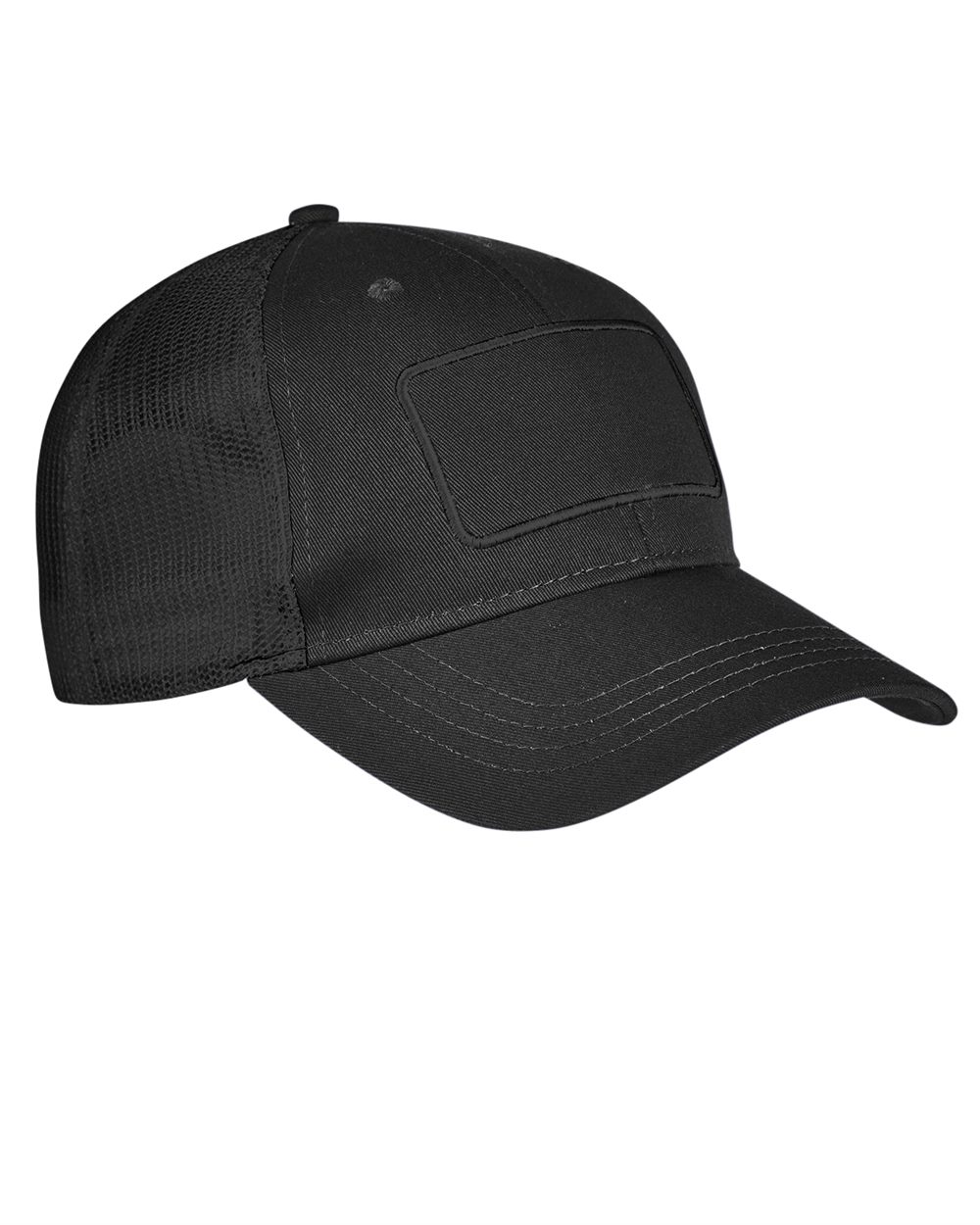

Shop Caps
See all →


People also ask
What is the best logo setup for a custom cap?
A structured cap with a simple, one- to three-color logo embroidered on the front, centered and sized to fit the panel. Add a small secondary mark on the side or back if you need one.
What are the best embroidery tips for caps?
Simplify the art, use bold lines and larger text, and limit colors. Pick a firm-front cap, send vector art, include PMS colors if you know them, and check the stitched-look proof.
How do I brand a hat with a detailed logo?
Use a patch, DTF or heat transfer instead of direct embroidery. These methods hold fine lines and gradients better. You can also create a simplified version of the logo for stitching.
Can I put a logo on the side or back of a cap?
Often yes. Many caps offer side or back locations, which suit smaller marks. The product page lists which imprint locations and methods each cap offers.
Ask PromoAI these questions
Tap one and PromoAI searches our live catalog and answers in seconds.

