



















Promotional Product Budgets: What $1, $5 and $15 Per Person Actually Buys
Cost per person decides your strategy — not the other way round. Here is what each tier really gets you, and where each one wastes money.
Nearly every promotional product budget conversation starts in the wrong place. Someone asks "what should we give away?" before anyone has said what the budget per person is — and those two questions cannot be separated. A $1 giveaway and a $15 gift are not the same tactic aimed at a different wallet; they do completely different jobs.
So here is the honest version, tier by tier: what you actually get, who it works on, and where each tier quietly wastes money.
First, the number that matters is cost per person — not total spend
A promotional product budget of $3,000 means nothing on its own. Spread across 3,000 trade-show visitors it buys a pen. Spread across 60 key accounts it buys a genuinely nice gift that gets remembered. Same money, opposite strategy.
Work out your cost per person before anything else:
- Total budget ÷ number of people you need to reach — and be realistic about that second number. Most companies over-order by 20–40% because they plan for the best-case turnout.
- Include decoration and shipping. A $0.90 pen is not a $0.90 pen. Setup charges, a second imprint colour and freight commonly add 15–30% on small runs.
- Divide by the number of impressions you expect, not units. A tumbler that sits on a desk for three years is a different buy from a pen that leaves in a tote bag.
The $1 tier: reach, not affection
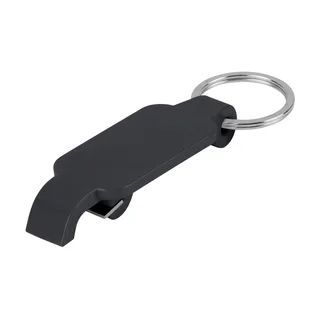
Under about $1.50 a unit you are buying volume. The job of this tier is to put your name in a lot of hands cheaply, and nothing more. Nobody is going to be delighted by a stick pen, and that is fine — delight is not what you are paying for.
This tier works when you have a genuinely large audience and a low-consideration product or service: a dentist, a hardware store, a community sponsorship, a university open day. It works badly when you are selling something expensive, because a cheap giveaway signals a cheap company to exactly the buyer you most want to impress.
Two things to know before you commit (the industry's own numbers on this come from the PPAI consumer research):
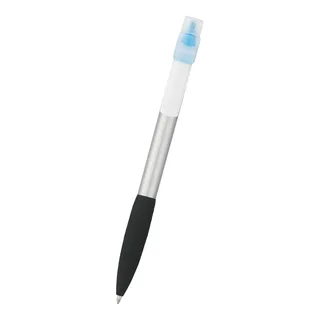
- writing-instruments" class="pg-autolink">Writing instruments still win on retention for this price, because they get used until they run out. A pen with a highlighter on the other end doubles the number of reasons to keep it on a desk.
- Avoid anything that will be thrown away at the airport. Liquids, aerosols and anything resembling a tool will not make it home from a conference.
The $5 tier: the one most companies should be using
Between roughly $3 and $7 is where promotional products stop being disposable and start being kept. This is the sweet spot for the majority of B2B spending, and it is the tier most often skipped — budgets tend to jump straight from "cheap pen" to "executive gift" with nothing in between.
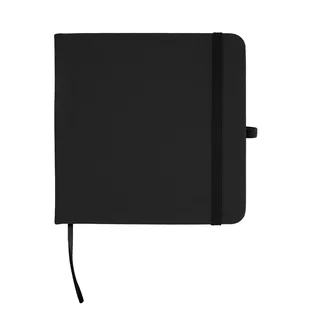
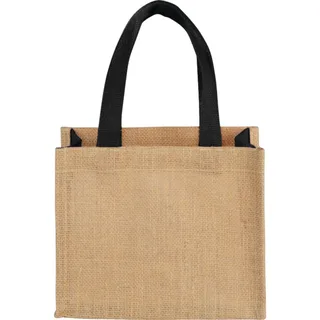
At this price you can buy something with a real use case: a notebook someone takes into meetings, a tote that gets reused for groceries, a small bag that lives in a gym locker. The imprint gets seen repeatedly by the recipient and incidentally by everyone around them.
The strategic advantage here is duration. A $5 notebook used over four months delivers far more impressions than five $1 pens handed to five people who lose them in a week — and it costs the same.
The $15 tier: for people you can name
Above about $10 a unit you should be able to name the recipients. This is relationship spending, not reach spending, and the maths changes completely: you are not buying impressions any more, you are buying goodwill from a specific person whose business is worth multiples of the gift.
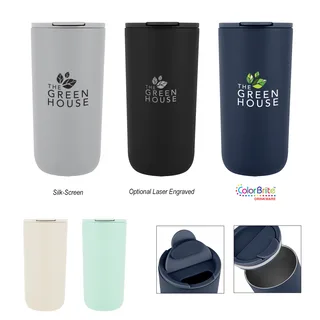
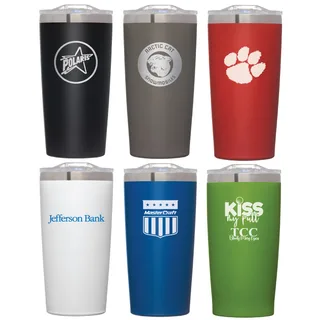
Insulated drinkware dominates this tier for a simple reason — it gets used daily, in public, for years. A stainless tumbler on a client's desk is an advertisement with a three-year run time, which no $1 item can match on cost per impression despite the higher sticker price.
Where this tier goes wrong is indiscriminate distribution. Putting $15 gifts in an open bowl at a trade show booth is the single most expensive mistake in this industry. Gate it: badge scan, demo attendance, a booked meeting. Make the gift the reward for the action you actually want.
What to do with a fixed promotional product budget
If your budget is already set, the highest-leverage move is almost never "find a cheaper version of the same product". It is to split the budget by audience:
- Tier your giveaway at events. A $1 item on the counter for passers-by, a $5 item for anyone who gives you a business card, a $15 item for booked demos. Same total spend, far better targeting.
- Order the cheap tier deep and the good tier shallow. Price breaks are steepest at the bottom, so volume discounts do more work there.
- Spend the saving on decoration, not quantity. A full-colour imprint on 500 units beats a one-colour imprint on 750. People keep things that look good.
- Check your lead time before your price. Rush charges routinely cost more than the difference between the product you wanted and the one you settled for.
A note on the prices below
The products under this article pull their pricing from our live catalogue every time this page loads, so what you see is what it costs today — not what it cost when this was written. Promotional product pricing moves with freight, material and supplier cost; any article quoting fixed prices from a year ago is quoting fiction.
If you tell us your budget and headcount, we will come back with options at each tier and the real landed cost including decoration and freight.
Products mentioned in this article
Live pricing — updated Oct 14, 2026.
Tell us your budget and headcount
We will come back with options at each tier and the real landed cost — product, decoration and freight — so you can compare like for like.

